I’ve been thinking a lot about what it means to be a “good doctor”. In today’s age of technology, AI and seemingly never ending source of information, I wondered what do people want from their doctors? I admit being one myself and surrounded by other healthcare providers, it’s hard to see our own blind spot.
I’ve been spending some time living in Bali and during this time, met people from all over the world. I took this opportunity to ask strangers, “what do you want your doctor to be like?”
And the answers were surprising… and not at the same time.
People said they wanted their doctor to be “human” and “not perfect”. They wanted their doctor to “listen, to be empathetic”, to“care” about them, to have a genuine desire “to help” and “to treat them as a whole person”.
It turns out, patients are people, and like anyone else, they want to be seen.
In my first week of medical school, our instructor gave a speech about professionalism. This memory left a lasting and cautionary impression in me of what an “ideal” doctor “ought to be”. Much of which was focused on how we should dress, how we should behave in public, how we should speak…
What we were taught were outer expressions, with no mention of inherent qualities like kindness, empathy, and being present with our patients.
And yet these are the very qualities that patients want from their doctor.
I used to think there was no way AI could replace doctors, especially not in palliative care, where we work with complex medical and social cases, and more often than not, involving complex family dynamics. It is not solved by a simple algorithm and all of these complexities needs to be taken into consideration in order to provide the best care for the patient in how they want to live their end of life. I thought there was no way AI could take all of this nuance and communicate as well as a palliative care human doctor.
But an episode of GeriPal, a geriatrics and palliative medicine podcast, showed me otherwise. In this episode, the hosts interviewed Bob Wachter, Chair of Medicine at UCSF, and did a live demonstration using AI to break a cancer diagnosis to a young adult with children. I was shocked at how nuanced, careful, thoughtful, balanced, and quite honestly, perfect AI’s answer was. And this was in 2024… I can’t imagine how much better it must be now.
In my medical training, there was an emphasis on perfection. And yet, from talking to people,, I realized,
if it’s perfection we seek, it already exists… in AI. People are not seeking perfection, in fact they are seeking imperfection from their doctors, that is they want someone who is human.
Instead of the emphasis on perfection in medicine, perhaps we could adapt and teach future doctors, and remind ourselves, that it’s not only okay to not be perfect but in fact it is our very imperfection and our humanness that we need to hold on to.
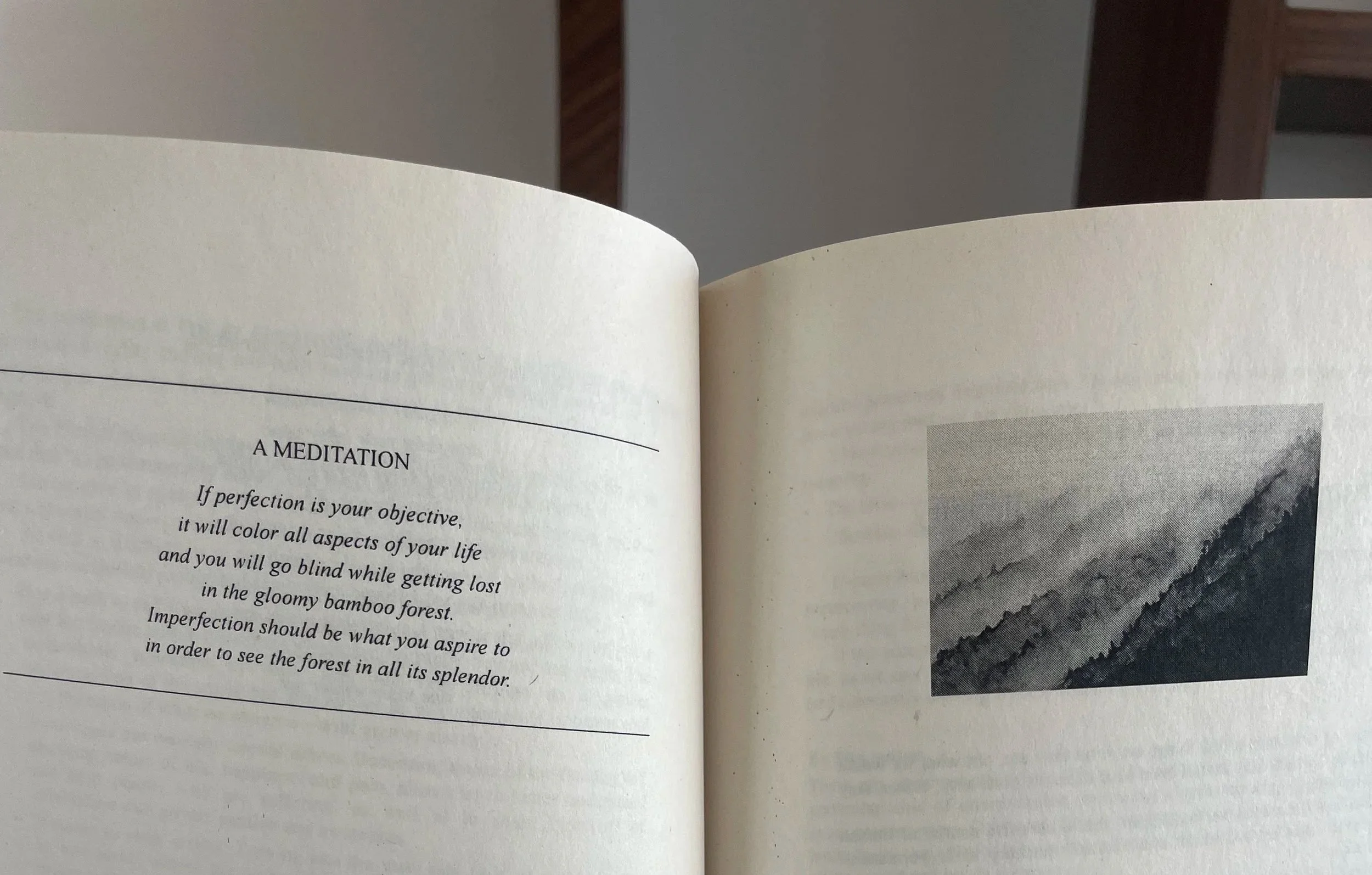
Excerpt from Wabi Sabi, the Wisdom In Imperfection - Nobuo Suzuki.